
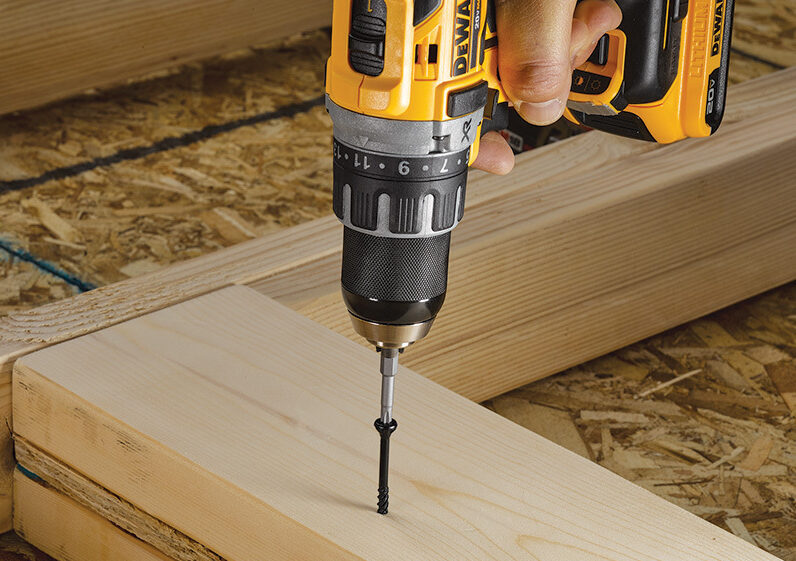
The right tool can make or break a job, and selecting the right screw gun or auto-feed system is where it starts.
A solution matched to the application delivers consistent fastening, reduces user fatigue and helps crews avoid costly mistakes like overdriven screws, stripped fasteners or damaged material.
However, not all screw guns are built the same. Whether you’re installing wood or composite decking, framing a structure or laying down sheathing, the right choice goes beyond raw power.
It comes down to features like depth-of-drive control, clutch settings and auto-feed capabilities. Investing in a professional-grade auto feed screw gun can change job site productivity, but understanding your overall options is key.
Here’s how to match the tool to the task.
Types of Screw Guns and Auto Feed Screw Gun Systems
Decking and framing jobs call for different types of equipment, each built for specific tasks and materials.
Knowing when to use a standard screw gun, an auto feed screw gun or an impact driver will keep your crew moving efficiently.
Standard Screw Guns
Known as a versatile option on the job site, standard screw guns offer adjustable speed, variable torque and precise depth control for driving individual wood screws into dimensional lumber, engineered wood products and composite decking.
Contractors often turn to a standard screw gun for subflooring, sheathing or structural connectors. Cordless models with brushless motors add longer runtime and hold up better on tough job sites.
Auto Feed Screw Guns
Built specifically for high-volume work, an auto feed screw gun (or collated screw gun) uses strips of pre-fed screws to drive hundreds of fasteners continuously without stopping to load each one by hand.
Advanced systems feature jam-free feeding technology and collated belts designed for continuous driving.
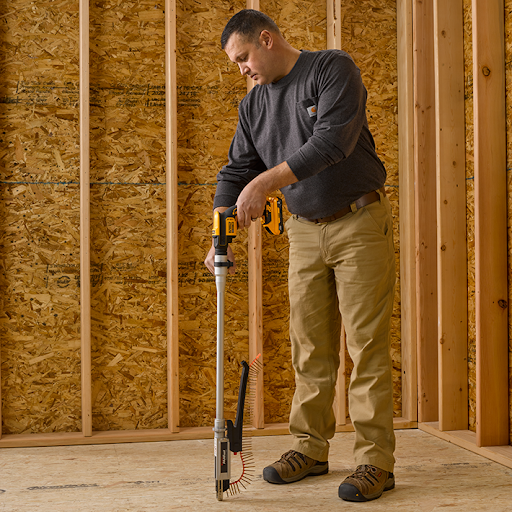
It’s also easier on the crew because they can use the screw gun attachment on an extension pole. This lets workers convert between long and short configurations, driving subfloor or decking fasteners while standing upright to eliminate back fatigue.
Impact Drivers
Rather than spinning continuously like a standard drill or screw gun, impact drivers drive fasteners through rapid rotational impacts, generating high torque with less kickback. While not a dedicated screw gun, they serve as a good match for heavy structural screws in dense framing lumber.
Decking vs. Framing Models: Matching Tools to the Job
Decking and framing tools can look alike, but the two applications call for different priorities, and choosing the right screw gun affects both performance and durability.
Decking Applications
Decking work is all about finish quality. Composite, PVC, hardwood and premium pressure-treated lumber show every mistake on a visible surface.
Using a dedicated wood screw gun, especially when paired with auto feed capabilities, prioritize depth control above all else to keep every screw perfectly flush without mushrooming or damaging the material.
High-RPM (revolutions per minute) screw guns give crews a smooth, consistent finish across large deck surfaces.
Framing Applications
Framing work is about structural strength. Driving heavy fasteners into dimensional lumber or engineered wood calls for higher torque rather than fine surface control.
A framing screw gun or impact driver is engineered to deliver raw driving power for structural connections rather than cosmetic finish.
For Pros With Both Deck and Framing Jobs
Crews working both decking and framing jobs are better off using dedicated tools for each.
Combining a specialized auto feed screw gun for high-volume decking and subfloors with a heavy-duty framing screw gun ensures accurate depth, consistent performance and proper fastener compatibility.
Performance Considerations
A high-performing screw gun balances driving power, speed and comfort for repetitive fastening. Whether you choose a traditional model or a continuous auto feed screw gun, several key factors dictate how much a crew can get done over a full workday.
Torque
This specification measures the raw driving force available to seat larger structural fasteners into dense materials.
RPM
RPM determines how quickly each screw goes in, an operating factor that compounds rapidly when running an auto feed screw gun across high-volume decking jobs.
Depth Control
Precision settings ensure every fastener sets flush, preventing overdriven heads, stripped threads and surface damage.
Ergonomics & Versatility
Motor balance, grip comfort and extension pole capabilities on an auto feed screw gun significantly reduce operator fatigue. Stand-up systems allow workers to easily convert from a long deck tool to a handheld unit for tight spaces.
Remember that no single spec matters in isolation. Your screw gun needs enough torque to handle the fastener, enough speed to keep pace and precise depth control to protect the material.
Material and Fastener Compatibility
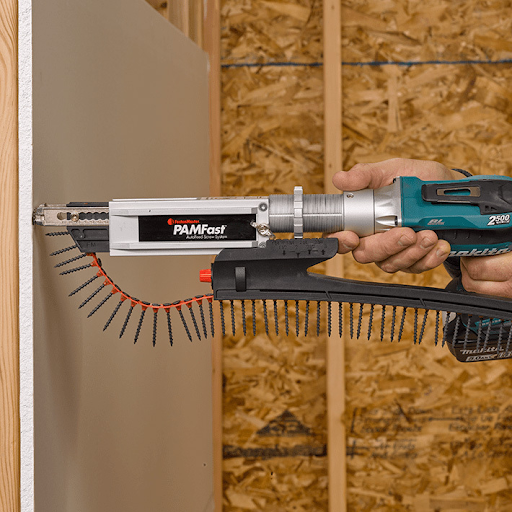
No single fastener setup works for every application. Screw length, head style, material density and whether fasteners are loose or collated for an auto feed screw gun all play a role in tool selection.
Using the correct combination of fastener and screw gun reduces stripped heads, prevents material damage, eliminates rework and keeps installations moving efficiently from start to finish.
Find the Right Tool and Fastener System for the Job With FastenMaster
The right fasteners should always match the performance of your screw gun and the materials you’re securing.
At FastenMaster, we engineer our fasteners and tools to work as a single, seamless system. That is why our PAMFast AutoFeed Screw System is now compatible with Cortex Autofeed screws, giving contractors the ultimate stand up screw gun setup. This system runs up to three times faster than traditional methods, such as loose fasteners, while reducing back strain and installer fatigue.
The PAMFast attachment arrives ready to work as a complete auto feed screw gun kit, pre-equipped with a DeWalt or Makita drill. Simply press, drive and lift, and the system automatically loads the next fastener without jams or rejections.
Want to experience the PAMFast system and Cortex Autofeed screws firsthand? Schedule a job site visit today to see how our products can cut installation time and boost productivity.